Let’s Find GraalVM for JDK 17
GraalVM is an OpenJDK-based distribution that integrates the Graal JIT compiler and the Native Image tool on top of the HotSpot VM. Compared to the traditional C2 compiler, Graal JIT can deliver more aggressive optimizations and sometimes higher peak performance, though at the cost of higher compilation overhead and memory usage. This makes it attractive for some enterprise workloads and latency-sensitive environments (e.g., Minecraft servers where tick performance matters).
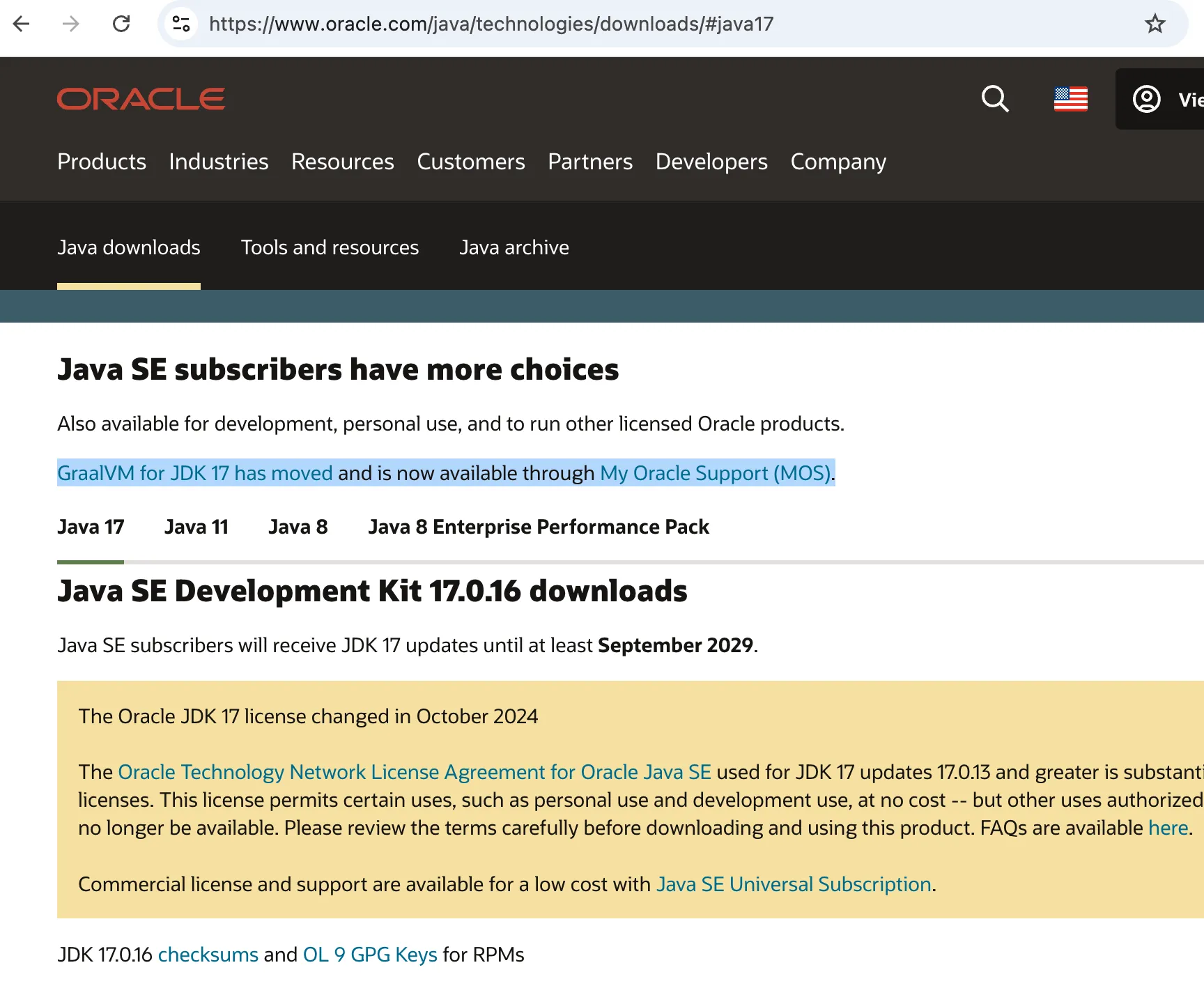
But getting Oracle GraalVM for JDK 17 is no longer straightforward. Since Detaching GraalVM from the Java Ecosystem Train, these builds have been removed from Oracle’s main download pages. Unlike downloading a regular Oracle JDK, finding them now requires some digging.
Oracle JDK vs Oracle GraalVM vs GraalVM CE
It’s important to separate the different distributions.
Oracle JDK
The standard Java SE product, powered by HotSpot VM (C1/C2 JIT). From JDK 11 to 24, Oracle JDK included Graal JIT only as an experimental option (-XX:+UnlockExperimentalVMOptions -XX:+UseJVMCICompiler). Graal JIT as an experimental compiler option is still available in JDK 23 and 24, but Oracle has announced it will be removed starting with JDK 25.
Oracle GraalVM for Java SE (JDK 17 and 21 only)
A special build based on OpenJDK, with Graal JIT enabled by default instead of C2, plus the Native Image tool and other components. These were released as part of the Java SE product line but were available exclusively to subscription customers through My Oracle Support (MOS). No JDK 24 release was provided.
Plus, these builds were sometimes casually called “Oracle GraalVM”, which causes confusion with GraalVM CE/EE.
GraalVM CE/EE
Independent distributions outside the Java SE product line.
- Community Edition (CE): open source, built on OpenJDK, includes Graal JIT, Native Image, and the Truffle framework.
- Enterprise Edition (EE): adds Oracle commercial support and some optimizations.
In short:
- Oracle JDK = conservative, stable, HotSpot-based.
- Oracle GraalVM for SE = special subscription builds (Oracle GraalVM for Java SE was only ever released for JDK 17 and 21. There was no JDK 24 release.).
- GraalVM CE/EE = independent product family with broader features, different support model.
Feature Differences
JIT Compiler
- Oracle JDK: default HotSpot C1/C2, Graal JIT only as experimental (removed after JDK 24).
- Oracle GraalVM for SE: Graal JIT as the default optimizer, runtime tuned around it.
Ahead-of-Time (AOT)
- Oracle JDK: no AOT after JDK 16 removed
jaotc. - Oracle GraalVM for SE: ships Native Image as an early adopter feature (not fully supported in SE builds). Native Image was shipped as an early adopter technology and not part of the standard, supported Java SE feature set.
Polyglot Support
- Oracle JDK: Java only.
- GraalVM CE/EE: Truffle framework for running JavaScript and Python. Ruby, R, and LLVM bitcode are in maintenance mode and no longer actively developed.
GraalVM CE in Practice
GraalVM CE is maintained independently of Oracle JDK:
- GraalVM CE can use Graal JIT as the default compiler, but the behaviour varies by release and platform. For example, some CE 17 builds enabled Graal JIT by default, while many CE 21 builds reverted to C2. Users should check the release notes for the exact behaviour on their target platform.
- Native Image available.
- Truffle included.
- Since 22.1, provides macOS/AArch64 builds (native Apple Silicon support).
Compared to Oracle JDK, CE has faster feature updates but a different security and LTS model. For enterprises, Mandrel (a Red Hat downstream of GraalVM CE, focused on Native Image) is often the preferred choice.
Oracle’s Roadmap Shift
Oracle announced the changes on September 15, 2025, with final cutoff at JDK 24:
- JDK 25 and later ship only HotSpot, no Graal JIT.
- GraalVM is no longer part of the Java SE product line.
- Updates to GraalVM-for-JDK builds (17/21) are only available through MOS.
- GraalVM development continues independently (CE/EE), while Oracle focuses Java SE on stability.
This marks a clear separation of tracks:
- Oracle JDK continues as the conservative, stable Java SE reference.
- GraalVM (CE/EE) becomes its own product family, focused on experimentation, polyglot runtimes, and Native Image.
For developers, the practical impact is simple: grabbing GraalVM for JDK 17 is no longer as easy as downloading a normal JDK. You either dig into Oracle’s site to find hidden links, or you switch to the GraalVM CE builds that live outside the Java SE release train.
Obvious Download Locations: Mostly 404
Naturally, the first stop is the official download pages.
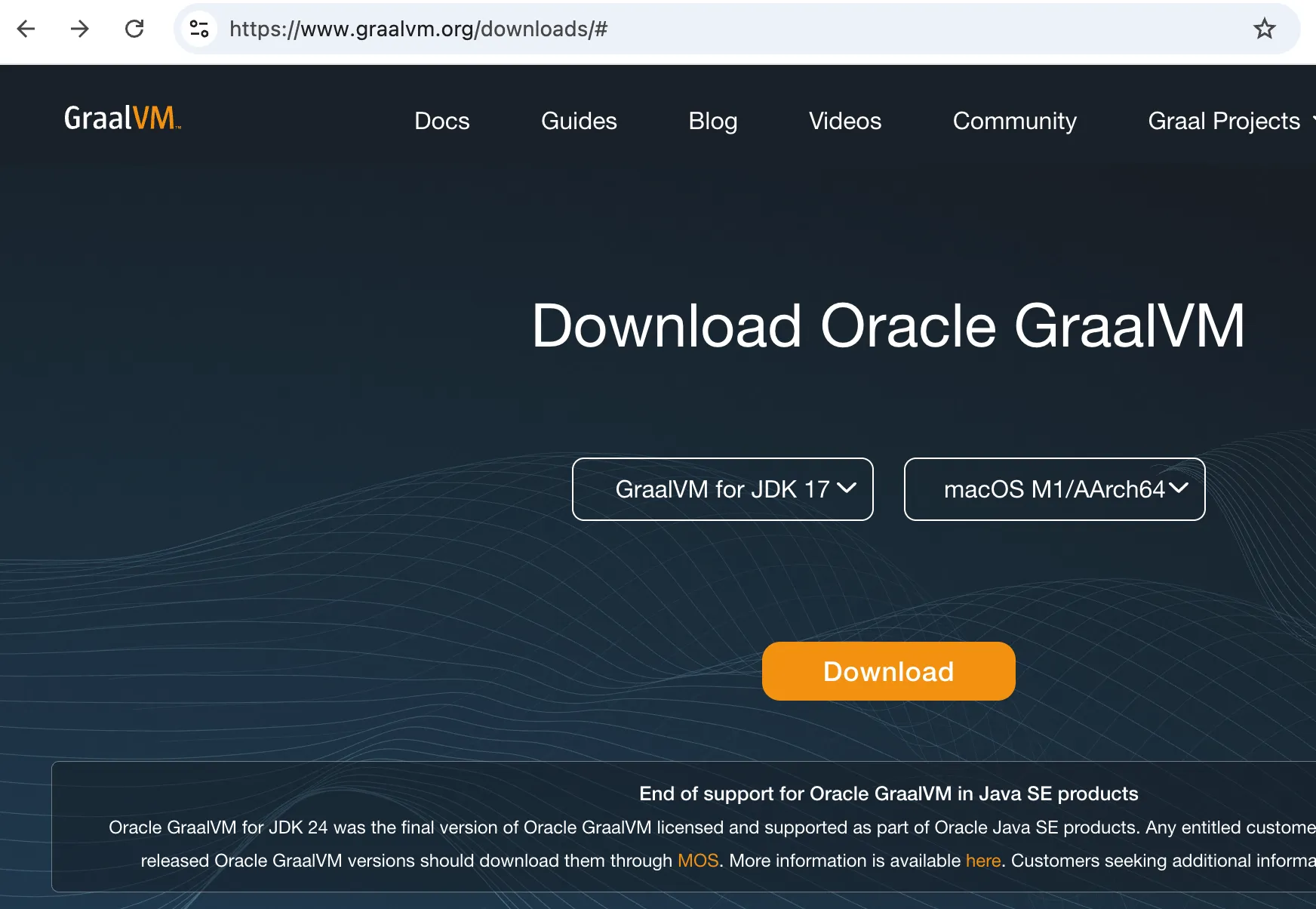
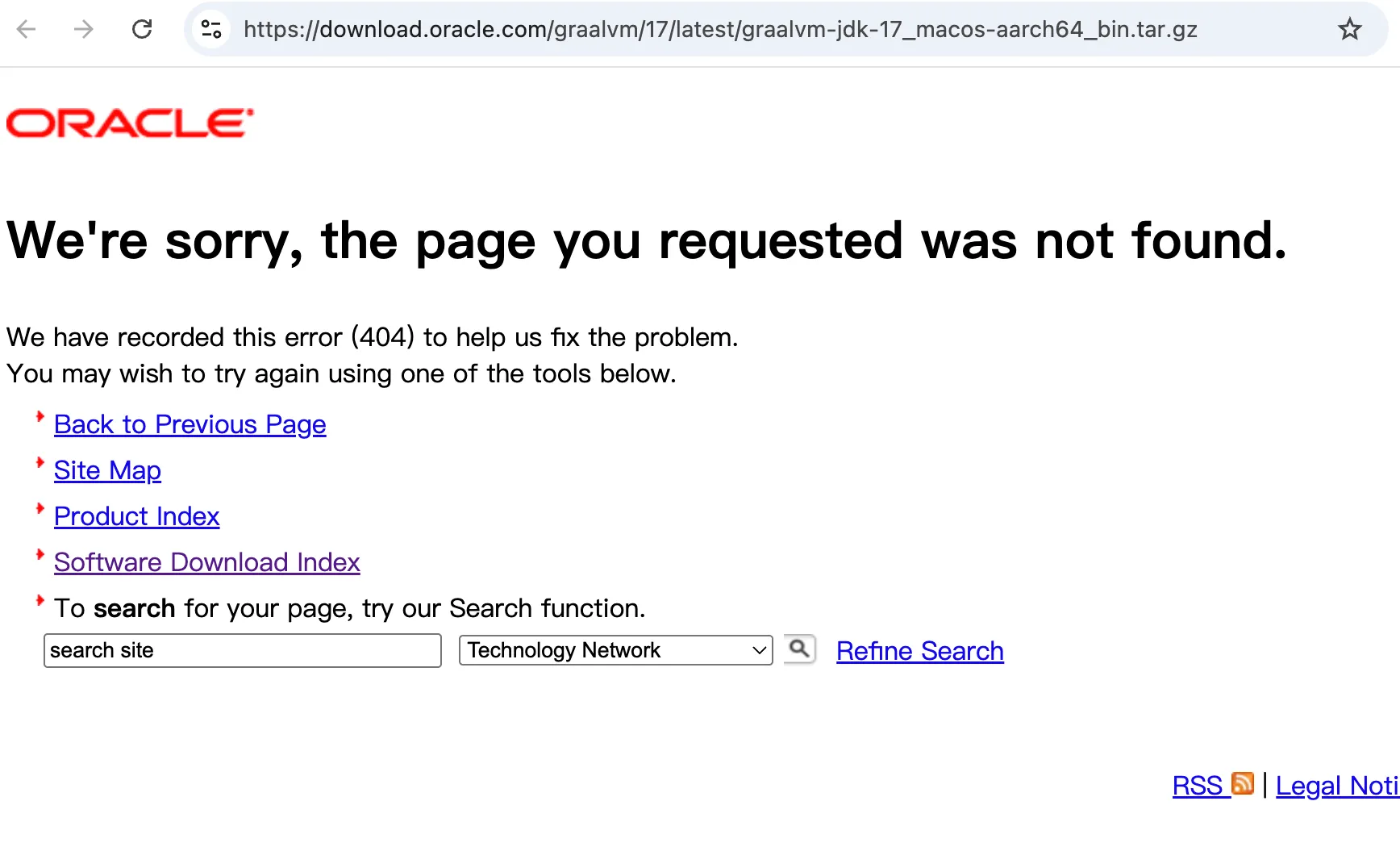
- graalvm.org: this is where GraalVM CE and EE are normally listed. You’ll find current builds like GraalVM for JDK 21 here. But if you try to look for JDK 17 builds, the links are broken and lead straight to a 404 page.
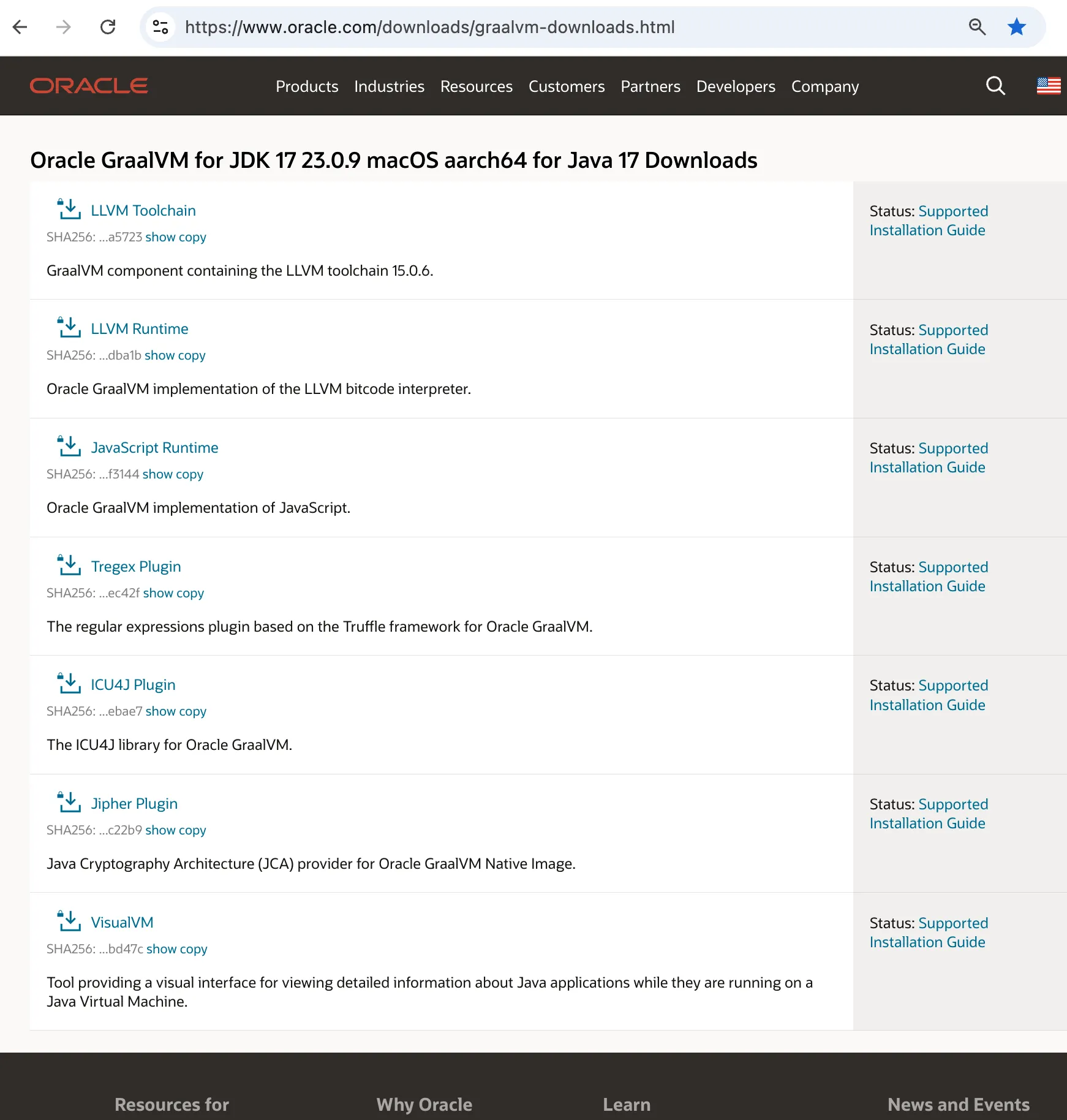
- oracle.com/downloads/graalvm-downloads.html: Oracle’s own GraalVM downloads page looks promising at first glance, but it only hosts surrounding tools and SDK components, not the actual GraalVM for JDK 17 binaries.
So, if you expect to get Oracle GraalVM for JDK 17 as easily as downloading Oracle JDK 17 itself, you’re in for disappointment. The obvious Oracle download pages are shut, often returning 404 errors. Community editions (CE) are still available through GitHub releases, SDKMAN, or Homebrew, but the Oracle subscription builds are hidden behind My Oracle Support.
Archive Hunting
Digging further, I stumbled upon something less visible: an archive page that still lists GraalVM alongside previous Java releases, back from the time when GraalVM was officially part of the Java SE product line:
https://www.oracle.com/java/technologies/downloads/archive/#GraalVMThis page is almost like a time capsule. It even still advises that GraalVM is available for free on Oracle Cloud Infrastructure, and that it is included in the Java SE Universal Subscription at no additional cost—messaging that clearly predates Oracle’s 2025 announcement to detach GraalVM from the Java SE train.
In other words, GraalVM for JDK 17 hasn’t been wiped out completely; the page still exists as a historical archive, even though the messaging predates the 2025 announcement. For those willing to dig, the treasure is still there.
Cider Lover
If you are using Homebrew, you can also find GraalVM for JDK 17 in the Caskroom. And that link works till I write this article (September 25, 2025).
https://formulae.brew.sh/cask/graalvm-jdk@17So, yes, sometimes the easiest way to get your cider (or GraalVM) is just to tap the keg.
Project Leyden
All of this digging for GraalVM for JDK 17 also shows a bigger shift in Oracle’s strategy. Features that once lived in GraalVM—like faster startup, quicker warm-up to peak performance, and smaller memory footprint, are now being developed directly in the OpenJDK world under Project Leyden.
The idea is to standardize some of the lessons from GraalVM Native Image and bring them into the Java platform itself. Instead of relying on an experimental add-on, future JDKs will carry these optimizations as a first-class part of Java SE.
For developers, this means GraalVM is no longer the only path to explore AOT and startup performance. With JDK 25 and beyond, Leyden is where the action moves. But until those improvements become mainstream, GraalVM for JDK 17 remains a fascinating artifact—part of Java’s recent history, and still useful if you know where to look.
Finding GraalVM for JDK 17 today is less about convenience, more about archaeology. If you just want a modern GraalVM today, skip the hunt and go for CE 22+; but if you enjoy a bit of Java archaeology, Oracle’s hidden corners still have treasures to dig up. Duke, I catch you!
EOF